What Keeps Exosomes Alive in Transit: −20/−80 Lanes and the 60/360-Day Windows
Half of exosome quality is made in the lab. The other half survives — or does not — in transit. Cold-chain shipping for EV programs is engineered, not hoped for. Lanes, temperature windows and paperwork decide whether potency survives arrival.
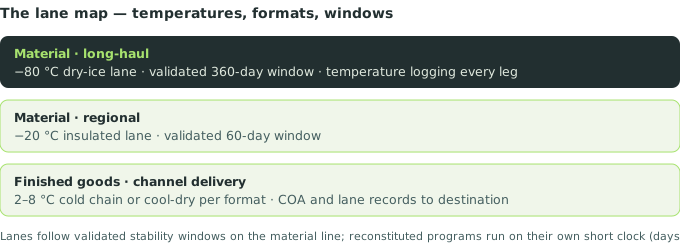
The material lanes
The raw-material line validates two lanes: −80 °C on dry ice for long-haul, with a 360-day stability window; and −20 °C insulated for regional programs, stable 60 days. Three-temperature warehousing (2–8 / −20 / −80 °C, with −196 °C liquid-nitrogen storage at the deep end) is the standard architecture behind it, with temperature logging and alarms tied to COA release.
The finished-goods window
Finished formats carry their own validated windows — wider than buyers expect:
| Format | Storage | Window (indicative) |
|---|---|---|
| Lyophilized powder, unopened | Cool, dry (room temp for some programs) | 6–24 months; up to 3 years reported |
| Lyophilized powder | 2–8 °C | Up to 24 months (sample) |
| Reconstituted (activated) | 2–8 °C | Days — use within the protocol window |
| Liquid formats | 2–8 °C cold chain | Per program spec |
The reconstitution clock is the rule buyers miss: once activated, you have days, not months, and no repeated freeze-thaw cycles. Ice crystals pierce the membrane.
The paperwork that closes the loop
Designed lanes carry temperature logging on every leg, and each destination receives the documentation set its market requires — COA, lane records, filing references. For a program manager, that is the difference between "we ship fast" and "here is the chart for your batch's journey."
The lanes behind our programs · Why lyophilized formats change the math · Ask for the lane map
Get the test panel that matches your batch
Tell us your target category and expected first batch size (a sample run, around 100 units, or 1,000 and up). We will send the matching test panel, characterization references, and a sample COA for your tier.